Should I Redesign My Website or Just Fix What I Have?
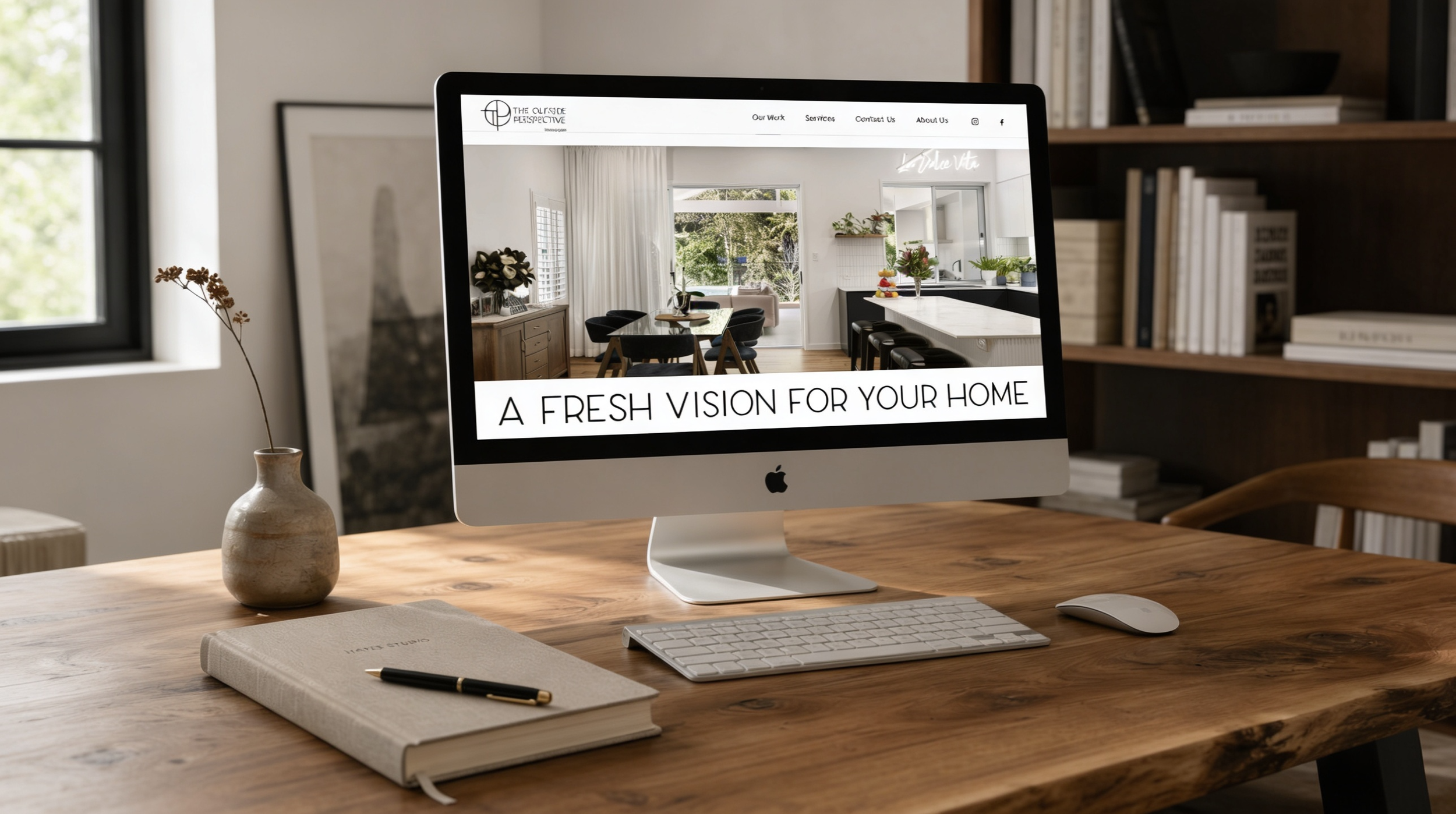
Here's the thing about this question. Most designers will tell you need a brand new website before they've looked at a single page. Because a full rebuild is a bigger job and a bigger invoice.
That's not how I work.
Before I tell you what you need, I look at what you've got. I audit your website — properly, from both a design and content perspective — and I look at your analytics to understand what's actually happening when people land on your site. What they're doing, where they're dropping off, what's working and what isn't.
Only then do I give you an answer.
What I'm actually looking for
When I audit a small business website, I'm looking at two things simultaneously.
First — is it saying the right thing? Does the content reflect your actual strategy, your actual offer, and the actual problem you solve for your clients? Or does it say something vague and hopeful that could apply to any business in your industry?
Second — is it looking like you? Does the design feel consistent, considered, and trustworthy? Or does it feel like someone built it in an afternoon and never came back?
Most of the time, I find both problems at once. And nine times out of ten, the website was built by the business owner themselves — which makes complete sense, because when you're starting out you do what you have to do. But a DIY website has a very specific set of symptoms that are almost impossible to miss once you know what you're looking for.
The signs I see over and over again
More than three fonts. Sometimes four, sometimes six. Each section looking slightly different from the last because every time something got added, a different font felt right in that moment.
Colours that don't match the branding. The logo is one set of colours. The website is another. The buttons are something else entirely. None of it is wrong exactly — it just doesn't feel cohesive, and cohesion is what builds trust.
Broken links. Contact forms that don't send. Pages that 404. Booking buttons that go nowhere. Every broken link is a potential client who hit a dead end and left.
Imagery that doesn't match the vision. Stock photos that look nothing like the business, the clients, or the world the brand actually lives in. Generic images that could belong to anyone — which means they're not doing anything for you specifically.
Words that don't match the strategy. Copy that describes what you do without explaining why anyone should care. Services listed without any sense of who they're for or what problem they solve. A website that talks about the business owner rather than the person reading it.
When I find all five of those things — and I usually do — the question isn't whether something needs to change. The question is how much needs to change.
So when is it a refresh and when is it a rebuild?
Here's my honest answer after auditing more small business websites than I can count.
If your website is on Squarespace — it's almost always a redesign.
Squarespace gives you a solid foundation to work with. The platform is clean, it's reliable, it's built for exactly this kind of business. If the bones are there, we don't need to demolish the house. We need to gut the interior — sort out the fonts, fix the colour palette, rewrite the copy, replace the imagery, fix the broken links, and make the whole thing feel like one coherent brand rather than a series of decisions made at different times.
That's significant work. But it's not starting from scratch.
If your website is on WordPress — it's almost always a rebuild. In Squarespace.
I say that without apology. WordPress is a powerful platform for the right business. A small service business with no dedicated developer on call is not that business. WordPress requires constant updates, constant plugin management, constant security patches, and the moment something breaks — and something always breaks — you're either paying someone to fix it or learning to fix it yourself.
Squarespace just works. You update it yourself in minutes. It doesn't break. It doesn't need a developer. And when we rebuild your WordPress site in Squarespace, you get something better than what you had — and you get to own it properly for the first time.
The conversation most designers skip
The thing I find most often isn't actually a design problem or a content problem. It's a strategy problem.
The website was built before the business owner really knew who their clients were, what they actually wanted, or how to talk about what they do in a way that lands. So the website reflects an earlier, less certain version of the business — and the business has moved on but the website hasn't.
That's not a design fix. That's a conversation. And that conversation has to happen before anything gets designed or written, because if we don't get the strategy right first, we'll just rebuild the same problem with better fonts.
This is why I always start with an audit and a strategy session before any build. Not because it adds to the scope — because it's the only way to make sure the website we build actually does what you need it to do.
What to do if you're not sure
If you're sitting with that nagging feeling that something's off with your website but you're not sure whether it needs a full rebuild or just some attention — start with an honest look at it.
Ask yourself:
Does it look like one consistent brand or a collection of decisions? Does the copy speak to your actual clients or just describe what you do? Are there things on it that are broken, outdated, or just wrong? Does it reflect where your business is now or where it was two years ago?
If you answered honestly and felt a bit uncomfortable — that's your answer.
And if you want someone to look at it properly before you decide anything, that's exactly what I do.
Lauren Bird Design — brand identity and website design for founder-led businesses in Bathurst and across Australia. Based in Central West NSW.