Why I Use AI in My Design Work (And What It Can Do for Your Brand)
Let me tell you what most designers won't say out loud.
AI imagery is genuinely incredible, and it's about to change what your small business can look like online. Not in a "one day maybe" way. In a "right now, this afternoon" way.
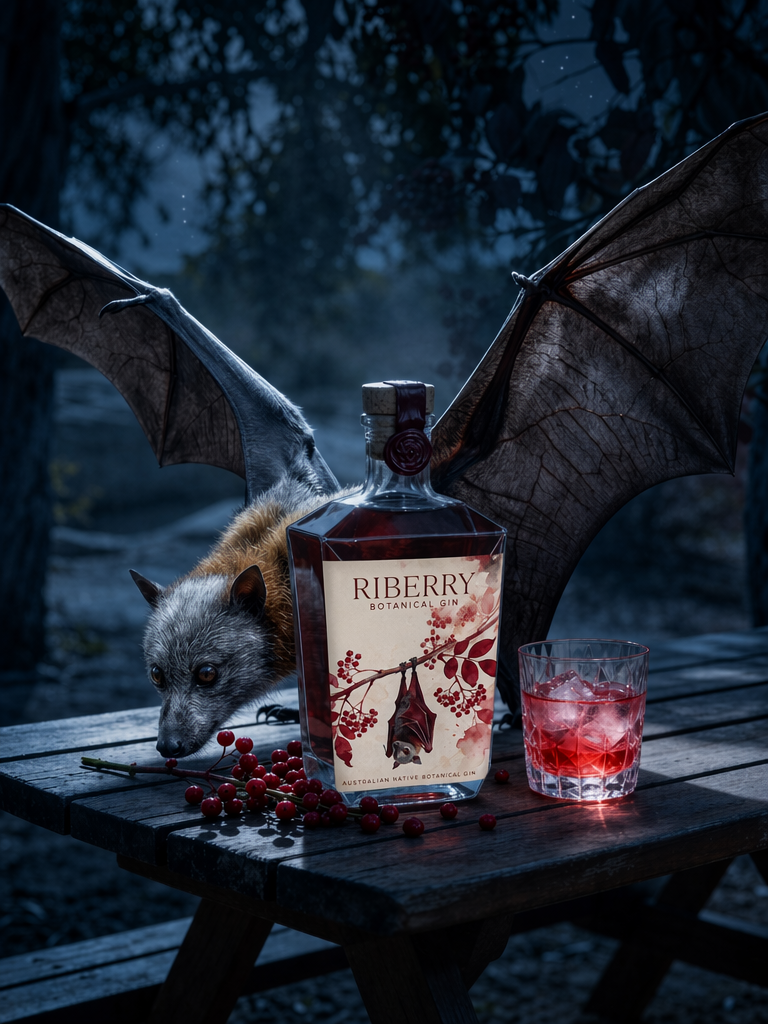
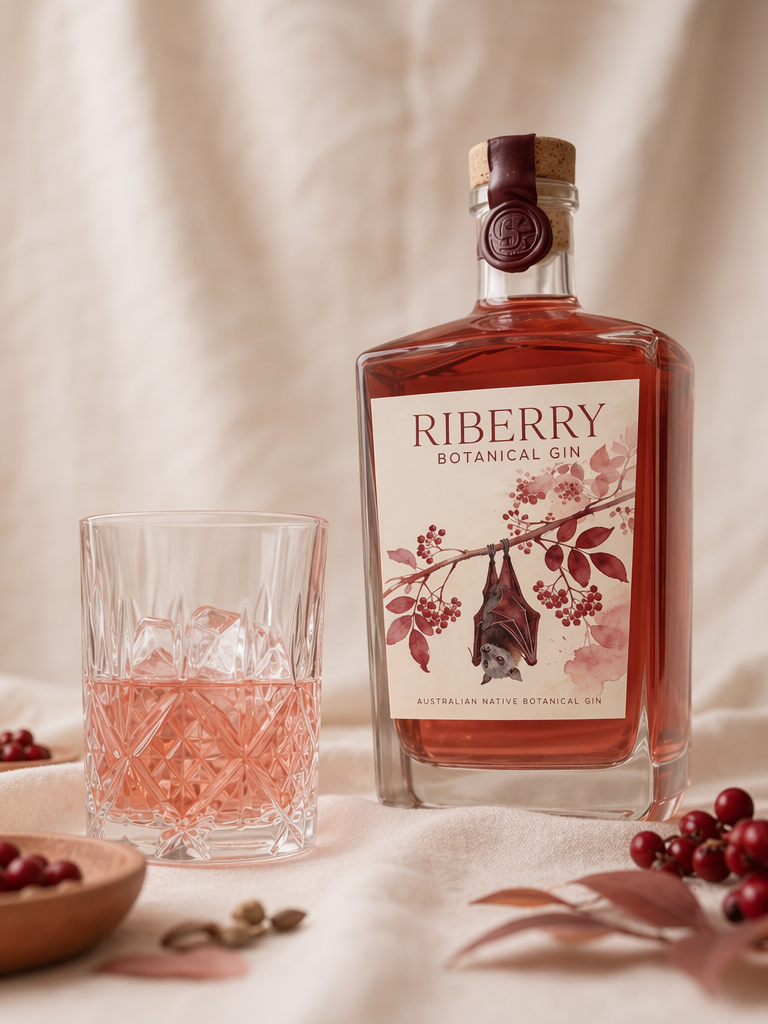
The flying fox at the top of this post? For a fictional gin brand I've been building called Riberry. That image would have cost thousands to produce as a real shoot — a licensed wildlife photographer, permits to work with a protected species, a creature handler, weeks of pre-production. Instead, I made it in an afternoon.
And I can make images like that for your brand too. Not generic stock imagery or Canva templates. Actual editorial-quality imagery, built specifically around your brand, your palette, your story.
That's the gift hiding inside AI tools right now, and it's going almost entirely unclaimed. Let me tell you why.
The tools aren't the problem. The trends are.
If you've scrolled Instagram for five minutes this week, you've seen it. A trend arrives, everyone chases it, and every feed starts to look like the last one. Ghibli, action figures, identical warm kitchen lifestyle shots — one after another, blending into each other. Different businesses but the same overdone image.
Everyone's running the same prompts through the same tools and producing the same visual output. It's Canva templates all over again, just with better lighting.
That's a branding problem, not a technology one. You can't stand out when you're using the same visual shortcut as fifty thousand other business owners. And the whole point of a brand is to stand out.
The flying fox image above doesn't look like a trend. It looks like one specific brand. That's deliberate. That's the gap.
Why this image looks like this
The flying fox didn't happen by accident. Every decision was made before I opened an AI tool.
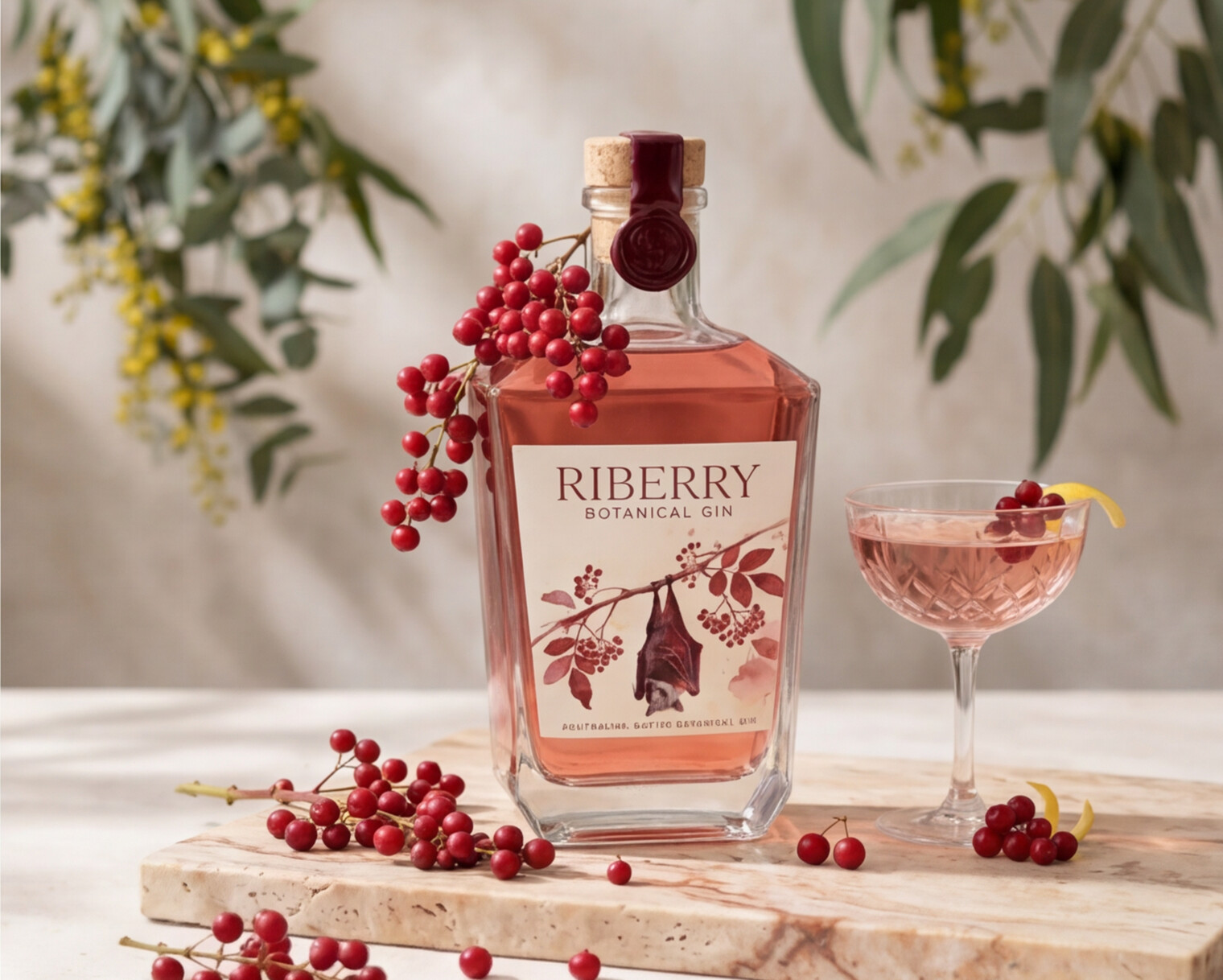
Riberry is a fictional premium Australian gin with a specific visual world — blush crimson liquid, cream watercolour labels, native animals tied to the botanicals they're named after. The flying fox is on the bottle because flying foxes are the primary seed dispersers of riberry trees in the wild. That's not decoration. That's story.
And the label itself — the actual brand work — I designed by hand.
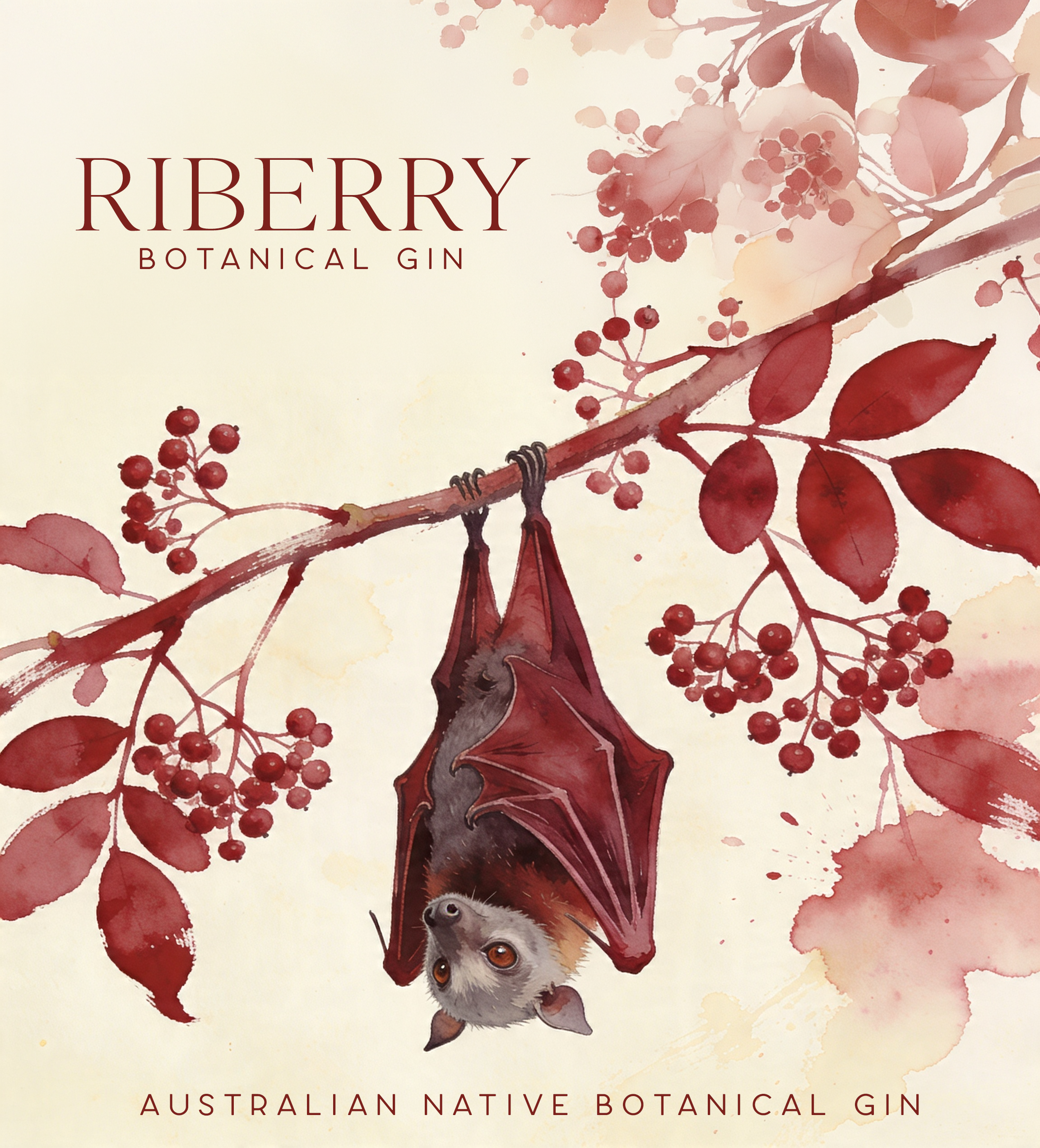
The logotype, the typography hierarchy, the botanical illustration, the layout, the colour application, all of it designed by me in the tools I've used for nineteen years. AI did not touch the label. AI cannot touch the label, because the tools aren't sophisticated enough to produce finished brand identity work at this standard. Not even close.
That distinction matters. The brand identity work — logos, typography, labels, guidelines — is mine. The AI tools come in afterwards, to produce imagery that brings the finished brand to life in contexts I couldn't shoot traditionally. Two separate crafts, both human-led; the label is the brand and the imagery is the storytelling.
This is the part that separates real design work from AI logo generators. Anyone can feed a prompt into a logo generator. The results are generic, soulless, and unusable at any scale a real business needs.
Once the actual label had been created, then I prompted the scenes. A well crafted brief describing every element around the bottle — the species of the fox, the angle of the light, the ban on green tones, the exact mood. Nano Banana rendered that brief. It didn't invent any of it.
Give the tool a clear brief and it produces something extraordinary. Give it a vague one, or this month's trending prompt, and you get whatever's most statistically common in its training data. Which is exactly why so much AI imagery looks the same.
When AI isn't the answer
One thing I want to be completely honest about, because it matters.
AI is not a replacement for a good photographer. It never will be, and it shouldn't try to be.
There are things a human photographer can do that no AI tool on earth can touch. The portrait of you that captures who you actually are. The product shoot in your real workshop with the real light coming in. The team portrait where everyone looks like themselves because the photographer made them laugh thirty seconds before pressing the shutter. That stuff has heart and soul, and this can only come from being in the room.
If you have the budget for a proper shoot, and the subject matter genuinely calls for it — your face, your team, your space, your product, your people — hire a photographer. Every single time.
Where AI earns its place is in the gaps around that work. The brand imagery you genuinely can't produce traditionally — either because the subject is impossible, the budget doesn't stretch that far yet, or the concept is too experimental to justify a full crew. For those gaps, AI is extraordinary.
I'll happily tell you when a project needs a photographer instead of an AI prompt. That's part of the job.
The bit that matters
AI is the most powerful creative tool put in a designer's hands in my lifetime. In skilled hands, it's a gift to every small business that previously couldn't afford editorial-quality brand imagery. In unskilled hands, chasing this week's trend, it produces the indistinguishable visual noise currently crowding every feed on earth.
The gap isn't the tool. It's the thinking behind it.
The label is designed by me. The imagery is directed by me. The tool is just that — a tool.
Your brand deserves to stand out. You can have imagery that actually looks like you, built around your palette, telling your story.
That's what this tool makes possible, used well.
—
If you want brand identity, Squarespace website design, and custom AI imagery that actually makes your founder-led business stand out, let's talk. If you're not sure what your brand needs yet, a Creative Unjam session is the right first step.