
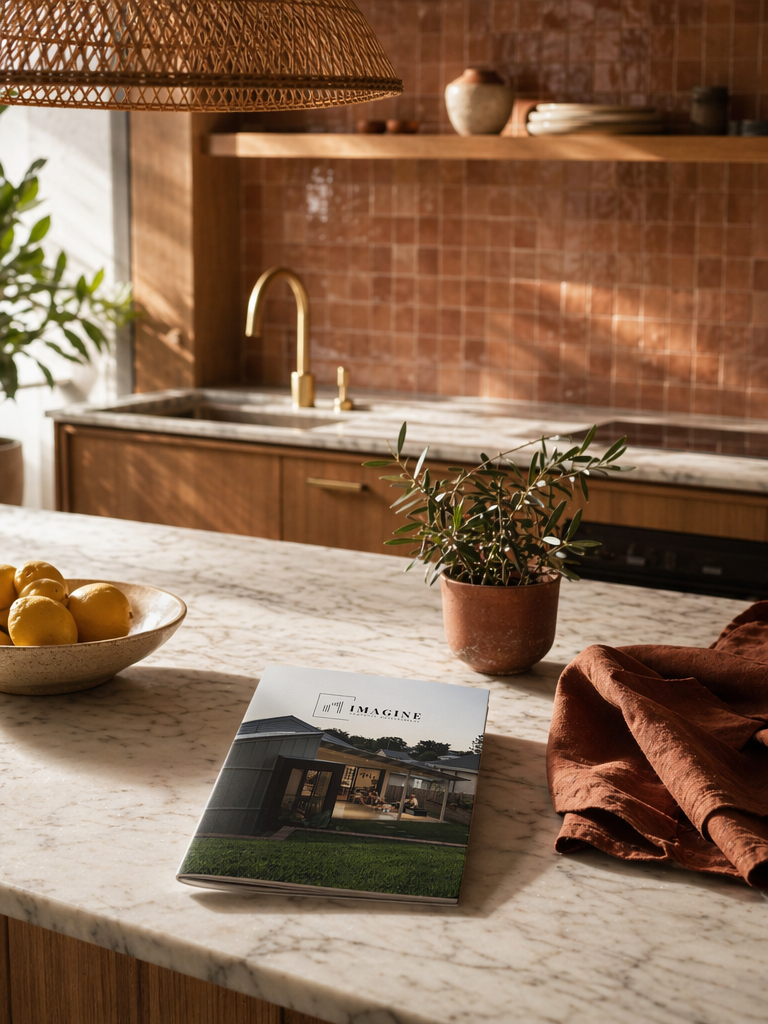
Imagine Property Development
Brisbane architectural residential builder. Capability statement and client budget document.
Tom Jeffreys has spent twenty years building award-winning residential homes in Brisbane. The work is properly considered. The clients are architects and homeowners with real expectations. The portfolio includes three QMBA House of the Year wins, a swimming pool of the year, and a long list of finished projects that hold their own against the designers and architects who commissioned them.
The documents that introduced that work to new clients weren't quite holding up the same standard. This case study is about what happened when we fixed that.
The brief
Imagine Property Development needed two documents that did heavy lifting at the top of Tom's sales process:
A capability statement that could sit on an architect's desk alongside a Murcutt monograph and not look out of place.
A client budget document that felt like the start of a considered partnership, not a rough quote pulled from an email template.
Both documents needed to reflect the calibre of the work Tom actually delivers. Both needed to do their job without shouting about it. And both needed to work equally well for the kind of architect-led residential client Tom typically works with and the kind of homeowner beginning a multi-year build.
The brief, effectively, was match the work.
The approach
Design-led residential builders sit in an unusual position. Their work is design-adjacent — they're collaborating with architects, interior designers, and clients who all speak the visual language of premium residential design fluently. But their own collateral is often the weakest link in that conversation, because most builders don't have access to designers who understand how that world actually looks.
So the approach was to treat Tom's documents with the same design standards you'd apply to an architect's portfolio book.
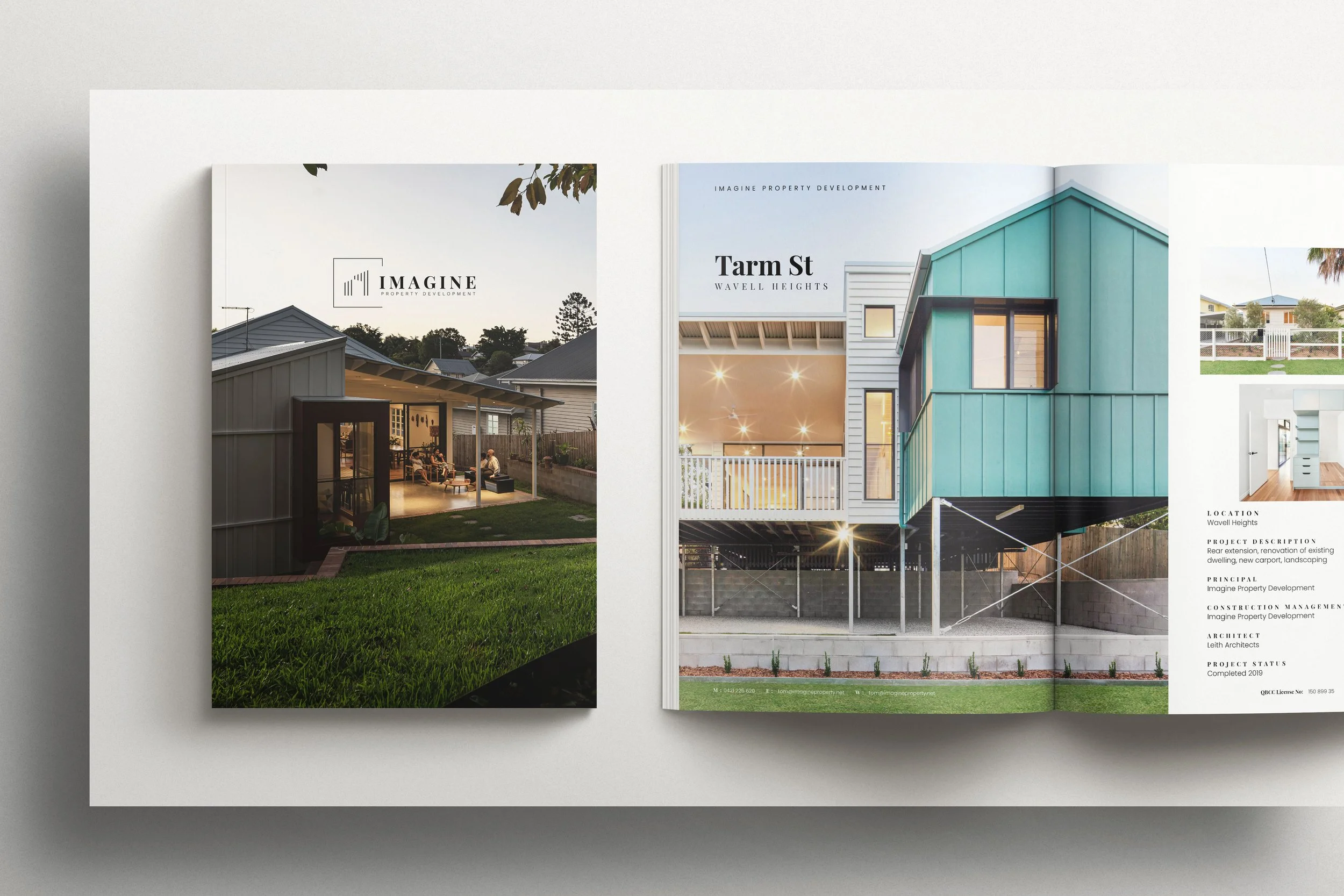
Editorial typography. A serif display face for the moments that need quiet authority. A restrained sans-serif for body copy that needs to recede. No decorative flourishes. No stock photography. No "modern" anything.
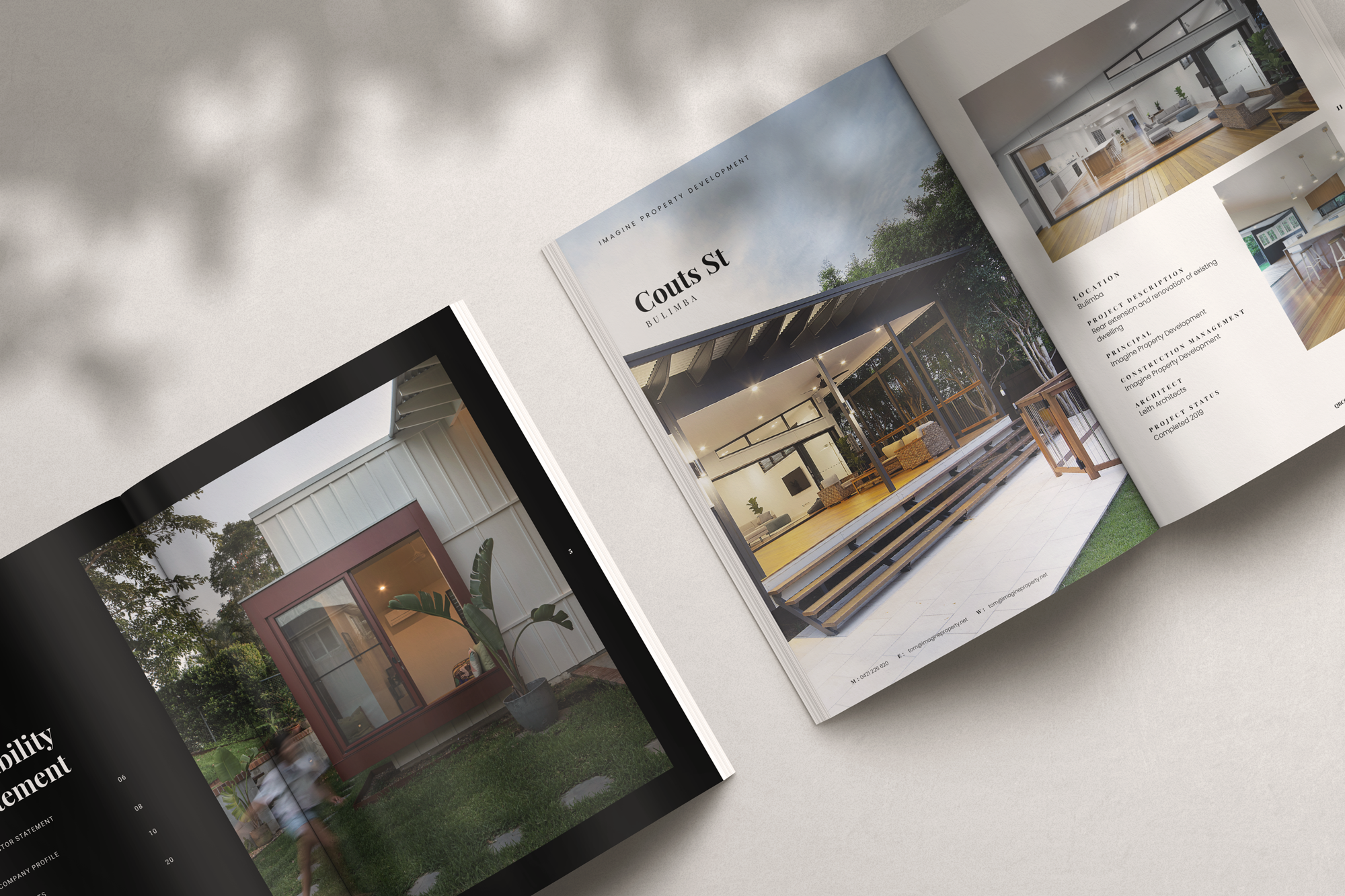
Confident white space. The documents breathe. Full-bleed photography gets room to speak. Project details sit in clean columns on the right-hand page. The reader's eye is directed without being managed.
Premium photography treated with restraint. The capability statement showcases four of Tom's signature builds — Couts St, Tarm St, View St, Sulva St, and Reading St. Each project is introduced with location, scope, architect, and completion year. The photography itself does the selling. The layout stays out of its way.
Testimonials that read like real writing. The testimonials section quotes Tom's clients at proper length — not bullet-point snippets but considered paragraphs that actually describe what it's like to work with him. Because that's how architects and serious residential clients actually decide who to hire.
A client budget document that matches. The same typographic system, the same restraint, the same confidence. A document that signals "this is how we'll work together" from the first page.
What the documents do now
A capability statement is not a brochure. It's a decision-making document that an architect or homeowner reads before they meet you. By the time you walk into a meeting with it already sent, half the conversation has already happened without you. That means the document itself needs to establish trust, professionalism, and taste — before you speak.
The same is true of a client budget document. By the time a client receives it, they're already deciding whether this feels like the start of a real partnership. Design does that work before the numbers on the page are read.
Both documents now do that job for Tom. They pre-qualify the right clients, they set the tone for how the work will feel, and they hold their own in the company Tom's builds actually belong in.
Why this matters for other design-led residential builders
Most Australian builders don't have collateral at this level. The default for the industry is Word documents, PowerPoint decks, and "we'll send through some info" emails with attachments that don't quite match.
For architectural residential builders working at Tom's level, that default is actively costing them the clients they want. Architects remember the builder whose documents felt like the work. Homeowners making a multi-year commitment notice every detail of every document they receive. The clients who have budget are the clients who notice.
If you're a builder whose work deserves better documents than you currently have, this is exactly what I do.